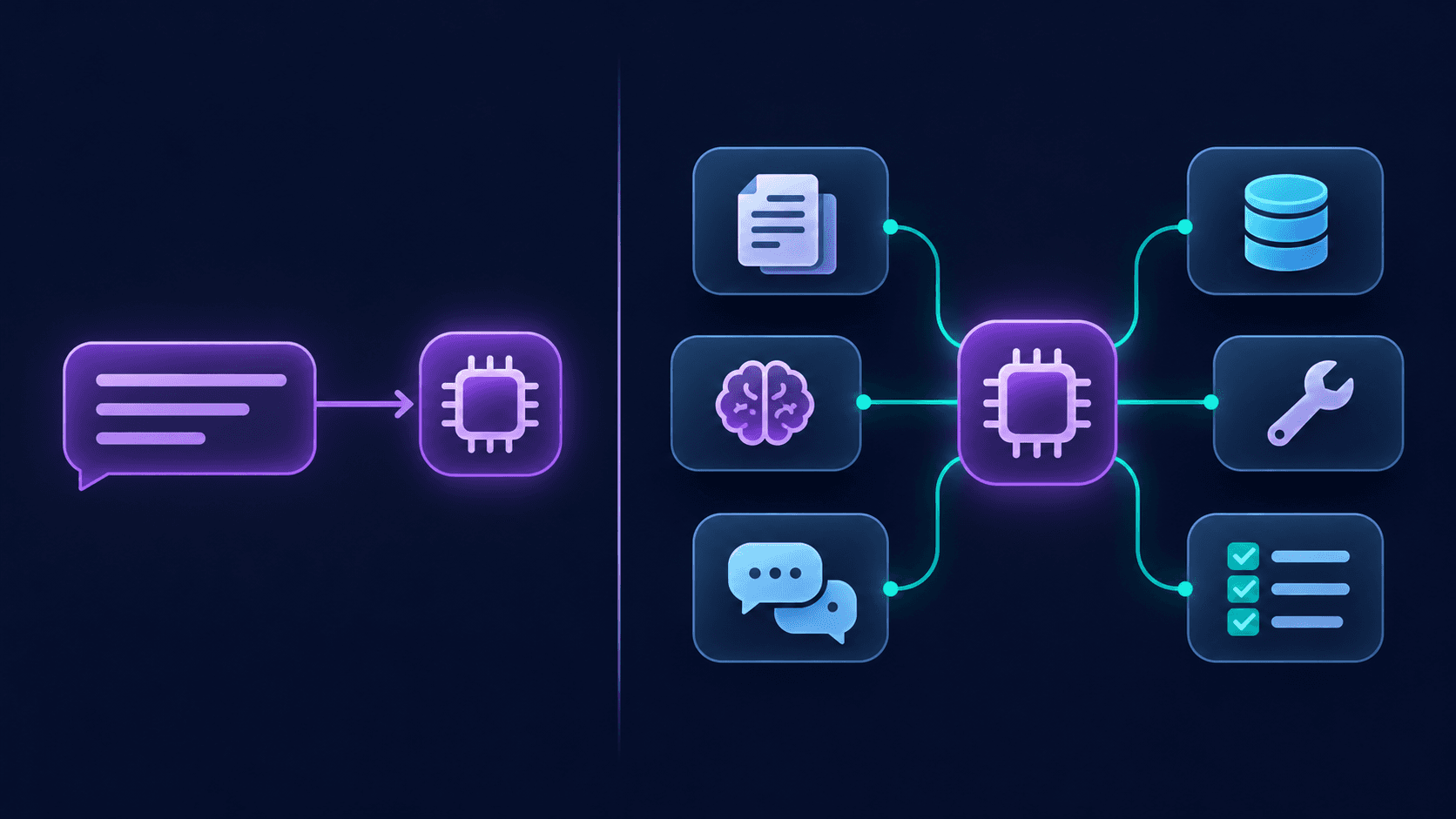
A few years ago, very few developers had heard the job title Forward Deployed Engineer (FDE). Today it is one of the most talked-about roles in the AI industry. OpenAI, Anthropic, Palantir, Salesforce and a long list of AI startups now hire engineers whose job is not just to write code, but to sit with customers, understand their messy real-world problems and ship AI systems that actually work in production.
This guide explains what a Forward Deployed Engineer is, what the job looks like day to day, which skills you need, the order in which to learn them, realistic salary ranges in India and abroad, and how to prepare for interviews. It is written for students, freshers, working developers and experienced engineers moving into AI engineering.
Key Takeaways
- A Forward Deployed Engineer is a software engineer who embeds with a specific customer to design, build and deploy solutions on top of a company's platform or AI models.
- The role was popularised by Palantir and has been adopted by frontier AI labs such as OpenAI and Anthropic to turn AI models into production systems.
- FDEs need strong full-stack coding skills, practical AI engineering (LLMs, RAG, agents, tool calling, MCP), cloud and DevOps basics, and excellent customer communication.
- You do not need to learn everything at once. A sensible path is programming → full stack → AI engineering → cloud/DevOps → customer-facing skills.
- Pay varies enormously by employer. Self-reported India averages sit in the low-to-mid teens (LPA), while published US ranges at frontier AI labs reach several hundred thousand dollars.
What Is a Forward Deployed Engineer?
A Forward Deployed Engineer is a software engineer who works directly inside a customer's environment to solve that customer's most important problems using their company's technology. Instead of building one feature for thousands of users, an FDE builds many things for one customer, and owns whether the solution delivers results.
The model comes from Palantir, which splits engineers into two tracks. Product engineers ("Devs") focus on one capability, many customers, while Forward Deployed Software Engineers ("Deltas") focus on one customer, many capabilities. In Palantir's own description, a Delta embeds with customers and configures existing software platforms to solve their toughest problems (Palantir Blog).
AI labs adapted the same idea for large language models. OpenAI describes its FDEs as owning discovery, technical scoping, system design, build and production rollout alongside customer engineering teams, with success measured by production adoption and measurable workflow impact (OpenAI Careers). Anthropic's Applied AI team describes FDEs who embed with strategic customers, build production applications with Claude models inside customer systems, and feed repeatable deployment patterns back to product and engineering teams (Anthropic job posting).
In one sentence: an FDE is a full-stack engineer plus technical consultant plus product translator, who is accountable for the customer's outcome, not just the code.
You may also see related titles such as Forward Deployed Software Engineer (FDSE), Forward Deployed AI Engineer, Applied AI Engineer, Deployment Engineer or AI Engineer (FDE). The names differ, but the core idea is the same.
Why Is the FDE Role Becoming So Important in AI?
Modern AI models are powerful, but a model alone does not change how a bank processes loans or how a hospital handles documents. The hard part is the "last mile": connecting the model to company data, legacy systems, security rules, approval workflows and real users. That is exactly where FDEs work.
Demand data reflects this shift:
- Postings for FDE roles rose by more than 800% between January and September 2025, according to Indeed data reported by the Financial Times and covered by Fast Company.
- In India, FDE job postings grew nearly 19x between June 2025 and June 2026, according to Indeed data reported by Analytics India Magazine.
- Investors at Andreessen Horowitz have described the trend as "services-led growth", where AI startups place technical teams directly with customers instead of relying only on self-serve products.
- Large vendors are investing too. ITPro reported Salesforce expanding its UK FDE team for Agentforce, alongside AWS and Microsoft announcing large investments in engineers who work inside customer organisations.
Growth percentages differ between data providers and start from a small base, so treat them as a signal of direction rather than precise forecasts. The underlying reason is stable: enterprises need people who can make AI work in their specific environment.
What Does a Forward Deployed Engineer Actually Do?
Most FDE engagements follow a loop. The FDE discovers the real problem, understands the customer's systems, designs a solution, builds it, deploys it and then keeps improving it with feedback and evaluations.

Figure 1: The FDE working lifecycle, a continuous loop from discovery to improvement.
A realistic example: imagine an insurance company wants to reduce the time its claims team spends reading long PDF documents. An FDE would:
- Discover: interview claims handlers and managers to learn which decisions take the most time and where errors happen.
- Understand: inspect where documents are stored, what data is sensitive, which systems must be integrated and what security review is required.
- Design: propose a retrieval-augmented generation (RAG) assistant that summarises claims and cites source pages, with clear success metrics such as review time and accuracy.
- Build: create a quick prototype, test it on real (approved) documents, then harden it with authentication, logging and error handling.
- Deploy: ship it into the customer's cloud with CI/CD and access controls.
- Improve: run evaluations, collect feedback, fix failure cases and document reusable patterns for the next customer.
This is an illustrative scenario, not a specific company's project, but it reflects the responsibilities listed in real FDE job descriptions.
Core Responsibilities of a Forward Deployed Engineer
Based on official postings from OpenAI, Anthropic and Palantir, and an analysis of 1,000+ FDE job postings by Bloomberry, which found working directly with customers to be the most common responsibility, typical FDE responsibilities include:
- Customer discovery and scoping: turning vague goals into clear requirements, milestones and success metrics.
- Solution architecture: designing systems that fit the customer's infrastructure, data and compliance constraints.
- Full-stack development: writing production-grade frontend and backend code, often in Python and JavaScript/TypeScript.
- AI integration: building LLM-powered features, RAG pipelines, agents, MCP servers and evaluation frameworks.
- Data integration: connecting to databases, APIs, data warehouses and enterprise tools such as CRMs and ERPs.
- Deployment and reliability: shipping to production, monitoring behaviour and debugging issues in live systems.
- Stakeholder communication: explaining trade-offs to engineers, managers and executives in plain language.
- Feedback to product: codifying repeatable patterns into tools and playbooks and reporting product gaps to internal teams.
- Travel and on-site work: many postings mention customer-site travel; Anthropic and OpenAI postings cite figures between roughly 25% and 50%.
FDE vs Software Engineer vs AI Engineer vs Solutions Engineer vs DevOps Engineer
The FDE role overlaps with several familiar roles, which is why it confuses many candidates. The key difference is ownership of a customer outcome while writing production code.

Figure 2: How the FDE compares with related engineering roles.
- Software Engineer: builds and maintains the core product for many customers. Customer contact is usually indirect.
- AI Engineer: builds LLM or ML-powered features and pipelines, usually inside the product team rather than at a customer site.
- Solutions Engineer / Sales Engineer: works mainly before the sale, running demos and proofs of concept. FDEs typically take over after the deal and own the production build.
- DevOps Engineer: owns infrastructure, CI/CD pipelines and reliability, and is measured on uptime, deployment speed and cost.
- Forward Deployed Engineer: combines the coding depth of a software engineer, the AI skills of an AI engineer, the communication of a solutions engineer and enough DevOps to ship safely.
The comparison with a product software engineer is the one most people ask about:

Figure 3: Forward Deployed Engineer vs product Software Engineer.
Skills Required to Become a Forward Deployed Engineer
Think of FDE skills as a stack. Strong fundamentals at the bottom make the higher layers easier, and the customer-facing layer at the top is what separates an FDE from other engineers.

Figure 4: The FDE skill stack. Learn from the foundation upwards.
Technical skills
- Programming: Python is the most requested language in FDE postings (Bloomberry found it in about two-thirds of the postings it analysed), followed by JavaScript/TypeScript. Palantir postings also list Java.
- Full-stack development: React or Next.js on the frontend, plus a backend framework such as FastAPI, Django, Express or NestJS.
- Databases: relational databases such as PostgreSQL or MySQL (explicitly mentioned in OpenAI postings), plus a NoSQL database such as MongoDB.
- AI engineering: LLM APIs, prompt engineering, embeddings, vector search, RAG, agents, tool calling, MCP, evaluations and guardrails.
- Cloud and DevOps: Linux, Docker, CI/CD, at least one cloud platform, logging and monitoring.
- System design: designing secure, scalable and maintainable systems under real constraints.
Non-technical skills
- Communication: explaining technical ideas to non-technical stakeholders, and writing clear documentation.
- Problem framing: finding the real business problem behind a feature request.
- Ownership: driving work to completion without waiting for detailed instructions.
- Comfort with ambiguity: both OpenAI and Anthropic postings emphasise thriving when requirements are unclear and stakes are high.
- Prioritisation: balancing scope, speed and quality when time is limited.
Do You Need Mathematics, DSA, System Design and AI/ML?
Is mathematics required?
You do not need research-level mathematics. Most FDE work involves using models through APIs, not training them from scratch. Useful maths includes basic statistics (averages, distributions, precision and recall for evaluations), probability intuition, and an understanding of vectors and similarity (for example, cosine similarity in embeddings). Linear algebra and calculus help if you later move towards ML engineering, but they are not the first priority.
Is DSA required?
Yes, at a solid practical level. Many companies, including Palantir and AI labs, include coding rounds. Focus on arrays, strings, hash maps, stacks, queues, trees, graphs, sorting, searching, recursion and basic dynamic programming. Equally important is writing clean, working code quickly, because FDE interviews often simulate realistic problems rather than pure puzzles.
Is system design required?
Yes, especially for mid-level and senior roles. FDEs regularly design systems that must integrate with a customer's existing infrastructure. You should be comfortable discussing APIs, databases, caching, queues, authentication, rate limiting, observability and trade-offs between cost, latency and reliability. For AI systems, add retrieval pipelines, model fallbacks, evaluation loops and data privacy boundaries.
Is AI/ML knowledge required?
For AI-focused FDE roles, practical generative AI knowledge is essential. OpenAI postings ask for experience building or deploying systems powered by LLMs or generative models, and Anthropic postings mention production LLM experience including prompt engineering, agent development and evaluation frameworks. Classic ML theory (training models, feature engineering) is helpful but usually secondary to applied LLM engineering.
LLMs, RAG, AI Agents, Tool Calling and MCP Explained Simply
Large Language Models (LLMs)
An LLM is a model trained on large amounts of text that predicts and generates language. Through APIs from providers such as OpenAI and Anthropic, developers send instructions and context and receive generated text or structured output. Key concepts to learn: tokens, context windows, temperature, system prompts, structured outputs, latency and cost.
Embeddings and vector databases
An embedding converts text into a list of numbers so that similar meanings sit close together. A vector database (or a vector extension such as pgvector for PostgreSQL) stores these embeddings and finds the most similar ones quickly. This is the foundation of semantic search.
Retrieval-Augmented Generation (RAG)
RAG lets an LLM answer using your organisation's documents. You split documents into chunks, embed and store them, retrieve the most relevant chunks for each question, and pass them to the model with instructions to answer only from that context and cite sources. RAG reduces hallucination risk and keeps answers grounded in up-to-date data without retraining a model.
AI agents and tool calling
An AI agent is an LLM-driven system that can plan steps and take actions. Tool calling (also called function calling) lets the model request a specific function, such as "search the CRM" or "create a ticket". Your code runs the function, returns the result, and the model continues. Good agents need clear tool definitions, permission limits, logging and human approval for risky actions.
Model Context Protocol (MCP)
The Model Context Protocol is an open standard, introduced by Anthropic, for connecting AI applications to external tools and data sources. An MCP server exposes tools, resources and prompts in a standard format, and any MCP-compatible client can use them. For FDEs this matters: Anthropic FDE postings list MCP servers, sub-agents and agent skills among the technical artifacts FDEs deliver for customers.
A simple RAG endpoint example
The sketch below shows the shape of a minimal RAG API in Python with FastAPI. The embed, vector_search and call_llm helpers stand in for your chosen embedding model, vector store and LLM provider SDK.
from fastapi import FastAPI
from pydantic import BaseModel

app = FastAPI()

class Question(BaseModel):
    text: str

@app.post("/ask")
def ask(q: Question):
    query_vector = embed(q.text)                  # 1. embed the question
    chunks = vector_search(query_vector, top_k=5) # 2. retrieve relevant chunks
    context = "\n\n".join(
        f"[{c.source}] {c.text}" for c in chunks
    )
    prompt = (
        "Answer using only the context below. "
        "Cite sources in brackets. If unsure, say you don't know.\n\n"
        f"Context:\n{context}\n\nQuestion: {q.text}"
    )
    answer = call_llm(prompt)                      # 3. generate a grounded answer
    return {"answer": answer, "sources": [c.source for c in chunks]}
In production, an FDE would add authentication, access control on which documents each user may retrieve, logging, evaluation datasets, rate limits and monitoring for cost and latency.
Cloud and DevOps Skills for FDEs
FDEs often deploy into the customer's infrastructure, so you need practical operations skills rather than deep platform specialisation:
- Linux: shell commands, processes, permissions, networking basics and reading logs.
- Docker: containerising applications so they run the same way everywhere.
- CI/CD: automated testing and deployment with tools such as GitHub Actions.
- Cloud platforms: core services on AWS, Azure or Google Cloud, including compute, storage, managed databases, IAM and secrets management.
- Monitoring and logging: structured logs, metrics, alerts and tracing for AI requests (prompts, latency, token cost, errors).
- Production debugging: reproducing issues, reading stack traces and rolling back safely.
- Security basics: least-privilege access, encryption, handling sensitive data and following the customer's compliance rules.
The Complete Forward Deployed Engineer Learning Roadmap
The roadmap below is organised into six levels. Each level lists why it matters, prerequisites, what to learn first, a practical exercise and the proficiency to aim for. The timeline is indicative for a beginner studying consistently; people with prior development experience can move faster.

Figure 5: An indicative FDE learning roadmap for beginners.
Level 1: Programming fundamentals
Why an FDE needs it: every customer engagement ends in working code. Weak fundamentals slow down everything else.
Prerequisites: basic computer literacy and logical thinking.
- Python: the most common FDE language. Learn first: variables, functions, lists, dictionaries, files, errors, virtual environments and pip. Exercise: write a script that reads a CSV, cleans it and outputs a summary report. Target: write small programs without looking up basic syntax.
- JavaScript/TypeScript: needed for web interfaces and Node.js backends. Learn first: functions, objects, arrays, async/await, modules, then TypeScript types. Exercise: build a typed utility that fetches data from a public API and handles errors. Target: comfortable reading and writing async code.
- Data structures and algorithms: learn first arrays, hash maps, stacks and queues, then trees, graphs and sorting. Exercise: solve two to three problems a week and explain your solution aloud. Target: confidently solve common medium-level problems.
- Object-oriented programming: classes, encapsulation, interfaces and composition. Exercise: model a library or inventory system. Target: design small, readable class structures.
- Problem-solving: break problems into steps before coding. Exercise: write a short plan before every exercise. Target: approach unfamiliar problems calmly.
Level 2: Software engineering
Why an FDE needs it: customers need complete applications, not isolated scripts.
Prerequisites: Level 1, especially JavaScript.
- HTML, CSS and React: learn semantic HTML, responsive layouts, components, props, state and hooks. Exercise: build a responsive dashboard UI. Target: build a multi-page interface independently.
- Next.js: routing, server rendering, API routes and deployment. Exercise: build a small full-stack app with a form that saves data.
- Backend development and REST APIs: HTTP methods, status codes, validation and error handling with FastAPI or Express. Exercise: build a CRUD API with input validation.
- Authentication: sessions, JWTs, OAuth basics and role-based access control. Exercise: add login and admin-only routes to your API.
- SQL and NoSQL databases: schema design, joins, indexes and transactions in PostgreSQL; document modelling in MongoDB. Exercise: design the schema for a ticketing system.
- Git and GitHub: branches, pull requests, code review and resolving conflicts. Target: work with Git daily and keep a clean commit history.
Level 3: Backend and system architecture
Why an FDE needs it: enterprise solutions must be secure, reliable and able to grow.
Prerequisites: Level 2 and at least one complete project.
- API design: resource naming, versioning, pagination and idempotency.
- Microservices fundamentals: when to split services and when a well-structured monolith is better.
- System design: load balancers, caching, queues and trade-offs. Exercise: design a URL shortener and a document search service on paper.
- Database optimisation: indexes, query plans and avoiding N+1 queries.
- Distributed systems basics: retries, timeouts, consistency and failure handling.
- Security and scalability: the OWASP Top 10, secrets management and rate limiting. Target: explain the trade-offs of your designs clearly in an interview.
Level 4: AI engineering
Why an FDE needs it: at AI companies, this is the core of the product you deploy.
Prerequisites: Levels 1 to 3, especially Python and APIs.
- Generative AI and LLM fundamentals: tokens, context windows, sampling and limitations such as hallucination.
- Prompt engineering: clear instructions, examples, structured output and system prompts. Exercise: build a prompt that extracts fields from invoices into JSON and test it on 20 samples.
- OpenAI and Anthropic APIs: learn the official SDKs, streaming, error handling, rate limits and cost tracking.
- Embeddings and vector databases: chunking strategies, similarity search, metadata filters, hybrid search.
- RAG architecture: ingestion, retrieval, re-ranking and citation. Exercise: build a document Q&A tool with sources.
- AI agents and tool calling: design tools with clear schemas, limit permissions and log every action.
- MCP: build a simple MCP server that exposes one internal tool or dataset.
- Evaluation and guardrails: create test sets, measure accuracy and groundedness, and add input/output checks. Target: show measurable improvement between versions of your system.
Level 5: Cloud and DevOps
Why an FDE needs it: a solution only creates value once it runs reliably in production.
Prerequisites: a working full-stack app.
- Linux: navigate servers and read logs confidently.
- Docker: containerise your app and database. Exercise: run your full project with Docker Compose.
- CI/CD: automatic tests and deployments on every pull request.
- Cloud platforms: deploy to AWS, Azure or Google Cloud using managed services and proper IAM.
- Monitoring, logging and production debugging: add dashboards for errors, latency and AI cost. Target: diagnose and fix a production issue using logs alone.
Level 6: Customer-facing engineering
Why an FDE needs it: this is what makes the role forward deployed.
Prerequisites: enough technical depth to make credible recommendations.
- Requirement gathering: ask open questions, observe workflows and confirm understanding in writing.
- Business problem analysis: connect technical work to time saved, revenue, risk or quality.
- Technical communication: write short design documents and explain trade-offs without jargon.
- Solution architecture: present options with pros, cons and costs.
- Customer collaboration and project ownership: run demos, manage expectations and drive delivery. Exercise: build a project for a real local business, NGO or college department and present the results. Target: lead a small project end to end.
In What Order Should You Learn These Skills?
Do not try to learn React, RAG, Kubernetes and system design at the same time. A practical order:
- Python, then JavaScript/TypeScript, plus Git from day one.
- DSA fundamentals alongside programming, a little every week.
- React/Next.js and one backend framework, with SQL.
- Build and deploy two complete full-stack projects.
- LLM APIs and prompt engineering, then embeddings and RAG.
- Agents, tool calling, MCP and evaluations.
- Docker, CI/CD and one cloud platform.
- System design practice and customer-facing project work.
Practical Projects Aspiring FDEs Should Build
Projects are your strongest proof of FDE readiness. Each should solve a believable business problem, be deployed and include a short write-up of decisions and results.
- Enterprise document Q&A (RAG): upload PDFs, ask questions and get cited answers. Stack: Python, FastAPI, PostgreSQL with pgvector, Next.js. Shows: RAG, evaluation and access control.
- Customer support agent with tool calling: an assistant that looks up orders and creates tickets through tools, with human approval for refunds. Shows: agents, permissions and logging.
- MCP server for an internal system: expose a database or ticketing API to an AI client through MCP. Shows: modern AI integration standards.
- Workflow automation for a small business: automate lead capture, CRM updates and follow-up emails using APIs or tools such as n8n. Shows: business impact and integration skills.
- Data extraction pipeline: extract structured fields from invoices or resumes into a database, with an accuracy report. Shows: structured outputs and evals.
- Production observability dashboard: track latency, errors and token cost for one of your AI apps. Shows: operational maturity.
How an FDE Solution Fits Together
Most of the projects above share a common architecture. Understanding this layered view helps in both real deployments and system design interviews.

Figure 6: How an FDE connects customer needs to a layered, production AI system.
Which Companies Hire Forward Deployed Engineers?
The following organisations have published FDE or equivalent roles (verified from official career pages or job boards at the time of research; openings change frequently):
- Palantir: the original Forward Deployed Software Engineer role, including new-grad openings, across the US, UK, Europe and the Middle East (Palantir careers).
- OpenAI: FDE roles in cities including San Francisco, New York, Seattle, London, Dublin, Munich, Paris, Tokyo, Seoul, Sydney and Abu Dhabi, plus a Forward Deployed Software Engineer and FDE platform roles.
- Anthropic: FDE roles within its Applied AI team in the US and Europe, alongside Applied AI Engineer and Architect roles (Anthropic careers).
- Salesforce: FDEs for Agentforce and Data Cloud, including roles listed in Gurgaon, India (listing).
- Other employers: data platforms, fintechs such as Ramp, vertical AI startups, consulting firms and global capability centres increasingly use FDE or Applied AI titles.
Tip: search job boards for all common variants: "Forward Deployed Engineer", "Forward Deployed Software Engineer", "Applied AI Engineer", "Deployment Engineer" and "AI Solutions Engineer".
Forward Deployed Engineer Salary in India and Internationally
FDE salaries vary more than most roles because the same title is used by Indian IT services firms, startups, global capability centres and frontier AI labs. The figures below come from public salary platforms and published job postings. They are not guarantees, and self-reported data can be based on small samples.
India
- Glassdoor: an average of about ₹12.9 lakh per year, with a typical range of roughly ₹9.5–17.9 LPA (25th–75th percentile) and top earners reported up to about ₹34 LPA, based on 26 self-reported salaries as of July 2026 (Glassdoor India).
- Salary.com: a median of about ₹14.1 LPA (data updated April 2025) (Salary.com).
- Higher bands: engineers at well-funded AI startups, product companies and remote roles for overseas employers can earn substantially more than these averages, but reliable public data for those segments is limited.
International
- Anthropic (US): a published range of USD 280,000–320,000 per year for FDE roles in San Francisco, New York and Seattle (posting dated August 2026, via the Accel job board).
- Anthropic (Europe): earlier postings listed GBP 225,000–255,000 in London and EUR 205,000–220,000 in Munich.
- Palantir (US): a listed range of USD 135,000–200,000 for a Chicago-based FDSE role, with equity and other benefits mentioned (per a Taro job listing).
- Across the market: Bloomberry's analysis of 1,000+ postings reported a median advertised base salary of roughly USD 174,000 among postings that disclosed pay.
Remember that published ranges usually show base salary only. Equity, bonuses, location, level and travel requirements change the total package significantly.
FDE Interview Questions and Preparation Strategy
Interview processes differ by company, but most FDE loops test four areas: coding, system design, AI engineering and customer-facing judgement.
Typical interview stages
- Recruiter screen focused on motivation and experience with customers.
- Coding round (DSA or practical problem-solving).
- System design or solution architecture round, often based on a realistic customer scenario.
- AI engineering discussion or take-home project (RAG, agents, evaluations).
- Behavioural and customer simulation round: decomposing a vague problem, handling pushback and communicating trade-offs.
Sample interview questions
- A customer says "we want AI in our support team". How would you run the first week of discovery?
- Design a RAG system for 2 million internal documents with role-based access. How do you prevent users from retrieving documents they should not see?
- Your agent works in testing but makes wrong API calls in production. How do you debug it?
- How would you evaluate whether a new prompt or model version is better than the old one?
- When would you choose RAG over fine-tuning?
- Explain MCP to a non-technical manager in two minutes.
- The customer wants a feature in two weeks that you believe needs six. What do you do?
- Tell us about a time you owned a project end to end with unclear requirements.
- How would you reduce latency and cost for an LLM feature used by thousands of employees?
- Design an API for a ticketing system and explain your database schema.
Preparation strategy
- Practise DSA consistently and time yourself on realistic problems.
- Prepare two or three deep project stories with problem, constraints, architecture, trade-offs and measurable results.
- Practise system design aloud, including AI-specific components such as retrieval, evals and guardrails.
- Do mock customer conversations with a friend acting as a sceptical stakeholder.
- Read the company's documentation and build a small project with its API before the interview.
Future Opportunities and Challenges of an FDE Career
Opportunities
- Strong demand: as enterprises move AI from pilots to production, they need engineers who can bridge models and business workflows.
- Fast learning: FDEs see many industries, systems and problems in a short time.
- Broad career paths: FDE experience leads naturally to solutions architecture, product management, engineering leadership or founding a startup.
- Global roles: many FDE teams hire across regions, including India.
Challenges
- Travel and context switching: frequent customer visits and multiple stakeholders can be demanding.
- Ambiguity and pressure: you are close to high-stakes business outcomes.
- Title inflation: some companies rebrand implementation or support roles as "FDE" without real engineering ownership, so read job descriptions carefully.
- Bespoke work risk: industry analysts such as TSIA warn that FDE teams can drift into one-off services work if patterns are not turned into reusable product.
- Fast-changing tools: AI frameworks change quickly, so fundamentals and learning ability matter more than any single library.
Frequently Asked Questions
Can a fresher become a Forward Deployed Engineer?
Yes, though most roles ask for prior experience. Palantir runs new-grad FDSE roles and some postings ask for around one year of experience, while senior AI-lab roles commonly ask for three to four or more years in customer-facing technical work. Freshers improve their chances with deployed projects and real users.
Is FDE a sales role?
No. It is an engineering role with heavy customer interaction. FDEs write production code and own technical delivery, usually after a deal is signed.
Which programming language is best for FDEs?
Python first, then JavaScript/TypeScript. Together they cover AI work, backends and web interfaces.
How long does it take to become an FDE?
For a beginner studying consistently, reaching an entry-level standard typically takes around 12–18 months of focused learning and project building. Experienced developers can transition faster by adding AI engineering and customer-facing experience.
Do I need a computer science degree?
Some postings prefer a degree in computer science or a related field, but demonstrated skills, shipped projects and customer-facing experience carry significant weight.
What is the difference between an FDE and an AI Engineer?
An AI engineer usually builds AI features inside a product team. An FDE applies those skills directly inside a customer's environment and owns that customer's outcome.
Is the FDE role remote?
Usually hybrid. Many postings require regular office presence and customer travel, commonly 25–50% at frontier AI labs.
Will AI coding tools replace FDEs?
AI tools make FDEs faster, but the core value of the role, understanding a customer's problem, earning trust and owning outcomes, is hard to automate. Skilled use of AI coding tools is becoming an expected part of the job.
Conclusion
The Forward Deployed Engineer sits where software engineering, AI and customer impact meet. If you enjoy building complete systems, solving messy real-world problems and working directly with people, it is one of the most rewarding paths in tech today. Start with strong programming fundamentals, build and deploy full-stack projects, add practical AI engineering, learn enough DevOps to ship safely, and deliberately practise working with real users. Follow the roadmap one layer at a time, and your projects will become the evidence that you are ready.
Sources and Further Reading
- Palantir Blog: Dev versus Delta
- Palantir Blog: A Day in the Life of a Forward Deployed Software Engineer
- OpenAI Careers: Forward Deployed Engineer
- Anthropic: Forward Deployed Engineer, Applied AI
- Model Context Protocol documentation
- Bloomberry: analysis of 1,000 FDE job postings
- Fast Company: FDE postings up 800%
- Analytics India Magazine: FDE postings in India grew nearly 19x
- Glassdoor India: FDE salaries
Salary figures and job details were checked in November 2026 and may change. Always confirm the latest information on official career pages.